
Community-Based Ownership Models
Rural Housing Toolkit Modules
- Module 1: Rural Housing is a Pillar of Wisconsin’s Economic Growth
- Module 2: Building Support for Rural Housing Solutions
- Module 3: Financing: Unlocking Resources for Rural Housing
- Module 4: Working with Developers
- Module 5: Community-Based Ownership Models
- Module 6: Innovative Ideas for Rural Housing
- Module 7: Who’s Who of Rural Housing in Wisconsin
- Module 8: Definitions
Community-based and innovative models put ownership, control, and equity in the hands of rural residents. From land trusts to cooperatives, these approaches offer creative solutions that preserve affordability, build local wealth, and strengthen the social fabric of rural communities. Through community land trust and residential cooperatives, residents can ensure access to affordable housing in their communities. This model creates ownership opportunities for some people who would be otherwise unable to purchase a home and empowers community members to get involved in local decision-making.
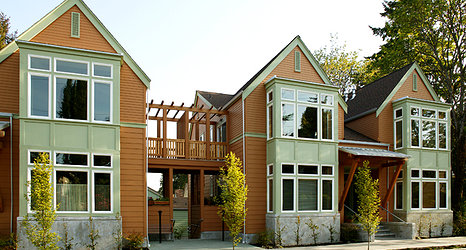
Cooperative ownership
Cooperative housing developments offer a unique and community-centered approach to affordable living by allowing residents to collectively own and manage their housing. Unlike traditional rental or homeownership models, co-ops give members a stake in the property, sometimes resulting in lower housing costs and greater stability, and can lead to a stronger sense of community. For rural communities, cooperative housing can provide affordable, stable, and community-driven living solutions and a chance to collectively own and manage their homes, ensuring long-term affordability and local control in areas where traditional housing markets may be limited or unaffordable.
Case Study: Limited Equity at Spaulding Place Senior Cooperative Living in Black River Falls
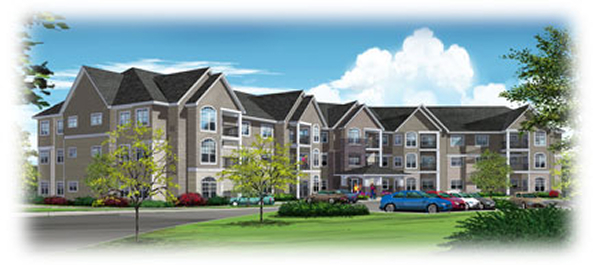
This senior cooperative community arrow-up-right-from-square of 27 units opened in 2015 and is designed to meet the needs of its senior members age 62 and older. Using the limited equity model, it provides a more affordable home ownership opportunity that is financially predictable with some secured equity growth. The cooperative is responsible for home maintenance and other services and provides opportunities for social activities. The elected board oversees and directs the policies, expenditures, and operations of the cooperative.
Key Resource: Wisconsin Cooperative Development Grant
Administered by WEDC, this grant program supports the formation and growth of cooperatives across the state. It is designed to strengthen Wisconsin’s cooperative economy by providing financial assistance for early-stage planning, feasibility studies, market research, and organizational development. The grant targets both new and existing cooperatives, helping them lay a solid foundation before making significant capital investments.
Eligible applicants include groups looking to establish a new cooperative or transition to a cooperative model, and existing cooperatives looking to further develop. By funding exploratory efforts and strategic planning, the program encourages innovative solutions to local challenges, promotes shared ownership, and fosters long-term economic resilience in communities—especially in rural areas.
More information, including application guidelines and deadlines, can be found on the WEDC Cooperative Development Grant page
Co-op ownership models
There are three primary models of housing cooperatives–limited equity, zero equity, and market rate–each offering distinct approaches to ownership and affordability. The definitions provided below are sourced from the University of Wisconsin Center for Cooperatives
- Limited-equity co-op: The cooperative puts restrictions on a unit’s sale price, with the restrictions outlined in the cooperative’s bylaws. This type of cooperative is designed to maintain long-term housing affordability. While most public sector programs have limited timelines, after which affordability disappears, a limited-equity cooperative can continue offering benefits forever.
- Zero-equity co-op: Zero- or group-equity cooperatives are a tool to provide more affordable housing. Member equity shares are similar to security deposits, and don’t accumulate equity appreciation. Monthly occupancy costs are comparable to more affordable rents.
- Market-rate co-op: Market-rate cooperatives typically require larger member equity share payments. Members purchase or sell their share at full market price. Similar to conventional real estate, members can build (or lose) equity as the value of their unit changes.
Evolving housing needs and economic development in rural Wisconsin
Wisconsin faces a significant housing shortfall, with studies estimating the need for 140,000 to 227,000 additional housing units by 2030 to meet growing demand. This challenge presents a critical opportunity for rural communities to invest in housing solutions that support workforce development and community vitality. Strategic investments in housing-specific funds, development projects, and infrastructure can empower rural areas to compete more effectively in attracting and retaining a skilled workforce. These efforts not only address immediate housing needs but also lay the foundation for long-term economic resilience, helping rural Wisconsin thrive in an increasingly innovation-driven economy.
As highlighted in WEDC’s impact reports, housing has emerged as a central pillar of regional economic development. In FY25 alone, WEDC supported more than 2,000 planned housing units across 16 counties, the highest number of housing-related grants since 2020, demonstrating the power of targeted investment to catalyze growth.
Success Story: Rock Ridge Cooperative, Dodgeville

Rock Ridge Cooperative, founded in 1980 in Dodgeville, grew out of the Rock Ridge Community, an intentional community established in 1971 with a mission rooted in mutual aid, sustainability, shared land stewardship, and educational outreach. For more than 40 years, the cooperative has operated under a zero equity model, despite bylaws written for a limited equity structure. With recent upgrades to septic and electrical systems, the coop is now positioned to build six additional housing units. To fully realize this opportunity and allow members to invest in and build equity within the community, Rock Ridge Coop pursued a WEDC Cooperative Development Grant to cover legal and consulting fees. These funds will support the complex legal transition to a limited equity model, ensuring the structure aligns with existing bylaws, mortgage terms, and long-term community values: empowering members to build wealth and reinvest in sustainable housing development.
Cooperative housing resources
Community land trusts (CLTs)
A community land trust (CLT) is a nonprofit organization that acquires and holds land on behalf of a community, with the primary goal of ensuring long-term housing affordability, community control, and equitable development by removing the real estate from the speculative market. In a CLT, the land itself is owned collectively by the trust, while individuals or families can purchase the home that sits on the land. This separation of land and home ownership allows the CLT to maintain control over the land and place restrictions on resale prices, ensuring that the housing remains affordable for future generations.
When buyers purchase homes from the CLT, they enter a long-term (often 99-year), renewable ground lease rather than owning the land outright. This lease outlines the homeowners’ rights and responsibilities and includes resale restrictions that limit how much they can sell the home for in the future. These limitations are designed to give homeowners a fair return on investment while preserving affordability for the next buyer. In this way, CLTs create a cycle of permanently affordable housing, shielded from market speculation and rooted in community stewardship. CLTs typically serve buyers who qualify for a mortgage but can’t afford the available market-priced homes.
Success Story: Chequamegon Bay United Impact Land Trust (CheqBUILT)
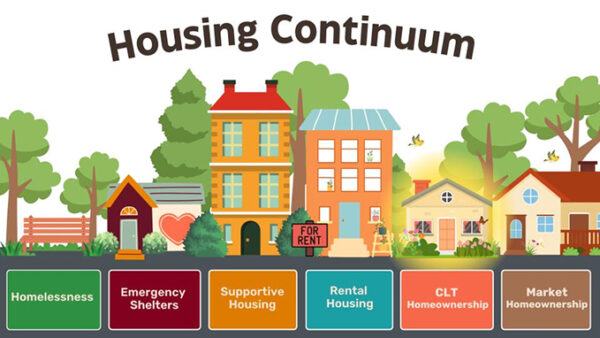
The Chequamegon Bay United Impact Land Trust, known as CheqBUILT, is a community-led initiative working to expand access to permanently affordable housing in the Chequamegon Bay region of Lake Superior in Northern Wisconsin. Faced with rising housing costs and limited inventory, CheqBUILT adopted the community land trust (CLT) model to ensure long-term affordability and local stewardship. By separating land ownership from homeownership, the CLT allows income-qualified residents to purchase homes while the land remains in trust. This structure keeps housing costs down and guarantees affordability for future generations.
CheqBUILT is actively building partnerships, securing funding, and engaging residents to shape a housing strategy rooted in equity and sustainability. Its work is helping to stabilize the local housing market, support working families, and preserve the character of rural communities in the region.


