
Financing: Unlocking Resources for Rural Housing
Rural Housing Toolkit Modules
- Module 1: Rural Housing is a Pillar of Wisconsin’s Economic Growth
- Module 2: Building Support for Rural Housing Solutions
- Module 3: Financing: Unlocking Resources for Rural Housing
- Module 4: Working with Developers
- Module 5: Community-Based Ownership Models
- Module 6: Innovative Ideas for Rural Housing
- Module 7: Who’s Who of Rural Housing in Wisconsin
- Module 8: Definitions
Financing is one of the most critical and often most time‑consuming components of rural housing development. The availability of financial resources ultimately determines a project’s feasibility, timeline, and scale. Unlike urban areas, rural communities face distinct challenges: limited access to capital, fewer financial institutions, and lower household incomes. Yet, with the right tools and partnerships, financing can serve as a powerful driver of innovation and long‑term sustainability.
Skip to content:
Capital stacks
In real estate development, especially housing projects, the capital stack is a way of describing how different sources of money are organized to fund a project. Think of it as a financial ladder: It shows who gets paid back first, who takes on more risk, and who has the chance to earn the highest returns. The stack usually includes a mix of borrowed money (debt) and invested money (equity), arranged in a hierarchy that makes clear how lenders and investors share both the risks and rewards of the project.
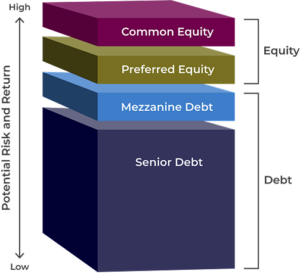
Layers of the capital stack
At the bottom is senior debt, the safest layer of financing. It carries the lowest risk, provides fixed returns, and holds the first claim on income or assets.
Above that is mezzanine debt, a riskier form of financing that compensates investors with higher interest rates.
Next comes preferred equity, which earns returns only after all debt obligations are met but still takes priority over common equity.
At the top is common equity, the most exposed to risk yet offering the highest potential reward if the project succeeds.
Capital stack categories and descriptions
Success Story: Revitalizing Rural Workforce Housing at Lindoo School Apartments

In Ladysmith, a shuttered elementary school was transformed into the Lindoo School Apartments and Townhomes, a vibrant, mixed-income housing development. The project created 40 thoughtfully designed units, including one-, two-, and three-bedroom apartments for families, seniors, and people with disabilities. With units reserved for households earning 30 to 60 percent of Rusk County’s median income, the development directly addresses the region’s urgent need for affordable workforce housing.
The project preserves the historic character of the former school while adapting it for modern living. Residents will enjoy features in compliance with the Americans with Disabilities Act (ADA), in-unit laundry, and shared community spaces. Its location near the Ladysmith Community Recreation Center offers walkable access to an ADA-accessible playground and public skate park, fostering intergenerational connection and active lifestyles.
What sets Lindoo School Apartments apart is its innovative capital stack: a layered financing strategy that brought together diverse public and private resources to overcome early challenges related to site reuse and funding. The project’s success hinged on strong local and state partnerships, including:
- WEDC Idle Sites Redevelopment grant: Catalyzed redevelopment of underutilized property
- WHEDA Section 42 Low-Income Housing Tax Credits: Anchored long-term affordability
- Wisconsin Department of Administration (DOA) HOME funds and Neighborhood Investment Fund: Supported housing rehabilitation and community investment
- Federal Home Loan Bank (FHLB) Affordable Housing Program: Provided gap financing for affordability
- Nicolet Bank construction financing: Enabled timely project execution
- WHEDA permanent financing: Secured long-term stability
- City of Ladysmith Tax Increment Financing (TIF): Leveraged local commitment to economic revitalization
This creative blend of funding sources demonstrates how rural communities can unlock complex financing tools to repurpose existing assets and meet modern housing needs. Lindoo School Apartments stands as a model for rural revitalization—where historic preservation, inclusive design, and strategic investment converge to build a stronger, more resilient future.
During a recent Office of Rural Prosperity webinar, Ladysmith City Administrator Alan Christianson shared insights into the project’s development, highlighting its replicable approach for communities across Wisconsin. Watch the full webinar here .
Assembling your capital stack: Key housing lenders and financing tools
For rural municipalities seeking to expand housing options, a strong financing strategy is essential. Assembling the capital stack means combining the right mix of funding sources to move projects from concept to construction. This often includes:
- Mission‑driven lenders, who prioritize community impact
- Grants, which lower overall development costs
- Low‑interest loans, which provide affordable borrowing
- Tax incentives, which attract private investment
Together, these tools create a balanced financing framework that supports affordability, sustainability, and long‑term success in rural housing development.
How do developers put together capital stacks?
To finance construction, developers assemble a capital stack—a layered mix of funding sources that together cover the full cost of development. Typical components include:
- Equity investments, which absorb risk
- Bank loans, which provide core financing
- Federal tax credits, which lower borrowing costs
- Local or state grants, which fill critical gaps
Each layer serves a distinct purpose, and when combined, they create a balanced financing structure. Successful developers also collaborate closely with municipalities to ensure that financing strategies align with zoning, infrastructure, and community priorities, resulting in projects that are both financially viable and responsive to local needs.
Local financing
Local financing plays a vital role in helping rural communities advance housing development and strengthen the capital stack. Municipalities can contribute by offering discounted or donated land, establishing local grant or loan programs, and using tools such as Tax Increment Financing (TIF) to support infrastructure improvements.
Partnerships with local utilities, employers, and anchor institutions, including hospitals and schools, can provide additional resources through funding, land, or services. Communities also support projects by streamlining permitting, waiving fees, and rallying public backing, which makes developments more competitive for state and federal funding. These local contributions not only reduce financial barriers but also demonstrate shared commitment, ensuring housing projects are both viable and deeply rooted in community priorities.
Equity in rural housing projects
Equity is the foundation of a strong capital stack. It represents ownership capital invested directly into a project, most often by developers, impact investors, or community real estate funds. This type of investment carries the highest financial risk but also provides the greatest potential for long‑term returns and decision‑making authority.
In rural housing, equity plays a critical role. It demonstrates confidence in the project, unlocks access to additional financing, and anchors development with long‑term commitment. By putting their own capital at stake, equity investors help ensure the success and sustainability of housing solutions designed to meet the unique needs of rural communities.
Debt financing
Debt financing is the process of borrowing money to fund a housing project, with a commitment to repay the loan over time, typically with interest. In rural housing development, debt financing is especially critical because it enables developers, municipalities, and individuals to access capital up front, even when local financial resources are limited.
Rural housing lenders:
- Community banks: Local financial institutions that understand rural markets and provide personalized lending solutions for housing and infrastructure
- Credit unions: Member‑owned cooperatives that offer affordable mortgage and construction loans, often with lower fees and community‑focused terms
- Community development financial institutions (CDFIs): Mission‑driven lenders that specialize in underserved areas and provide flexible, low‑interest loans and technical assistance for rural housing projects
- Public‑private partnerships: Collaborative arrangements between government entities and private developers or investors, these partnerships leverage public resources to attract private capital for housing development.
- Community Real Estate Funds (CREFs): Investment vehicles that pool capital to support community‑based real estate projects, prioritizing affordability, local ownership, and long‑term impact in rural areas
Success Story: Workforce Housing Through Strategic Planning in Viroqua
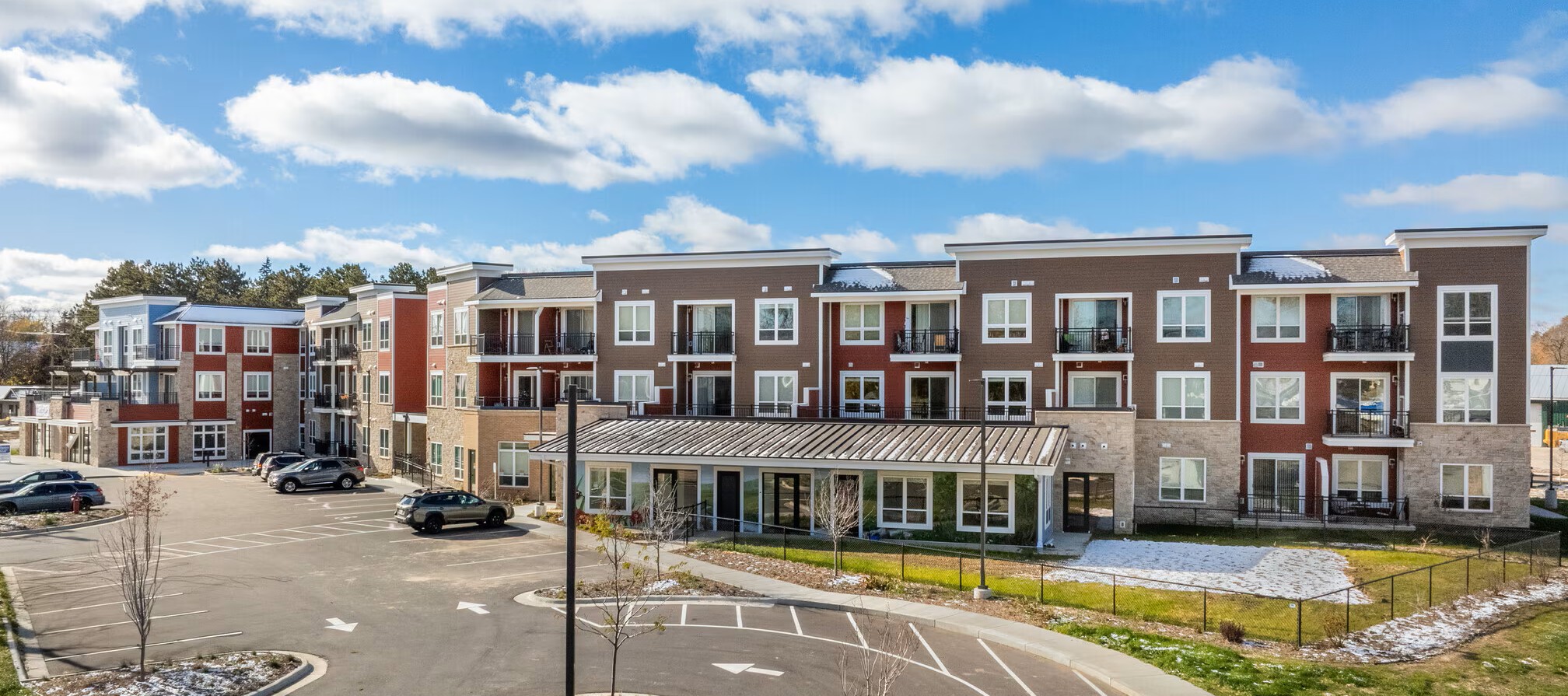
In May 2024, the city of Viroqua broke ground on the Main Street Apartments, a 65-unit mixed-use workforce housing development located in its downtown district. Developed by Northpointe Development, the project includes affordable housing units, 11 three-bedroom townhomes, and dedicated space for child care and retail. The site was strategically selected for its proximity to schools, health care facilities, and major employers, with existing infrastructure that helped reduce development costs and streamline construction.
The project was backed by a diverse mix of funding sources, including WHEDA Section 42 Low-Income Housing Tax Credits, WHEDA construction and permanent financing, WHEDA Capital Magnet Funds, WHEDA Housing Trust Funds, DOA HOME funds, DOA Neighborhood Investment grant, Federal Home Loan Bank Affordable Housing Program (FHLB AHP), and local Tax Increment Financing (TIF). It aligned with Viroqua’s comprehensive plan and benefited from early stakeholder engagement and updated zoning to support higher-density housing. Viroqua’s approach illustrates how thoughtful planning, community readiness, and strategic partnerships can lead to successful, locally supported housing solutions. The project was completed in fall 2025.
Tax credits and incentives
Smart financing begins with smart incentives. In Wisconsin, a variety of tax credits and relief programs help make rural housing projects more affordable and sustainable. These tools reduce development costs, attract private investment, and support long‑term affordability for both renters and homeowners.
Key Resource: Rural Development Finance Toolkit
The Council of Development Finance Agencies (CDFA) offers the Rural Development Finance Toolkit to help rural communities understand and apply key financing tools for housing and infrastructure projects. The toolkit covers instruments such as tax credits, bonds, loan guarantees, and revolving loan funds. It explains how each tool works, how to attract private and public capital, and how to structure deals that support long-term development. The resource also includes case studies and step-by-step guidance to help local leaders move from planning to implementation.
Financial incentive planning
Financial incentive planning is a strategic process for identifying and leveraging funding tools that strengthen rural housing development. It helps reduce financial barriers, attract private investment, and improve overall project feasibility. By aligning incentives with local priorities, communities can unlock new housing opportunities, encourage development, and promote lasting affordability. Whether the goal is restoring a historic building or constructing new affordable units, well‑designed incentives can be the key to making projects viable and sustainable.
Examples of incentive tools
- Tax Increment Financing (TIF): Uses future property tax revenue to fund current infrastructure improvements
- Land donation or discounted public land: Reduces upfront costs by lowering or eliminating land expenses
- Local housing trust funds: Provide dedicated resources to support affordable housing projects
- State and federal grants and loans: Offer critical funding to fill gaps and strengthen project viability
Tax credit programs and financial relief tools
Bonds: Big leverage for rural housinG

Bonds are a powerful way for rural communities to unlock the capital needed for housing development. Simply put, bonds function like loans: A group of investors provides upfront funding to a municipality, which in turn commits to repaying that money over time with interest. This arrangement gives communities immediate access to large sums of capital that can be used for housing projects, infrastructure, or other local priorities. By spreading repayment across many years, bonds make it possible to finance major investments that would otherwise be out of reach for rural municipalities.
Key bond components
- Issuer: The entity that needs capital, such as a city, state, or housing developer
- Investor: The person or institution that purchases the bond, effectively lending money to the issuer
- Interest (coupon): Regular payments made by the issuer to the investor at stated intervals during the bond’s term
- Maturity: The point when the bond term ends and the issuer repays the original amount, known as the principal or face value
Bonds in a rural housing context
Bonds, especially tax‑exempt private activity bonds, can be an effective tool for financing affordable housing projects. They are often paired with Low‑Income Housing Tax Credits (LIHTC) to make developments financially viable. While bonds have traditionally been used for large urban projects, newer models such as direct purchases and private placements are making them more accessible for rural communities.
Bonding also creates opportunities for municipalities to partner with developers on site infrastructure. In this approach, a municipality issues bonds to cover the cost of infrastructure improvements and negotiates repayment through a developer agreement. As lots are sold, the developer repays the municipality a portion of each sale. The agreement specifies a minimum annual repayment amount sufficient to cover the bond’s principal and interest. This method provides upfront capital for infrastructure while ensuring repayment as development progresses. It is a win‑win strategy that helps rural housing projects move forward.
Key benefits of bonds
- Lower interest rates mean lower housing costs: Tax‑exempt municipal bonds provide below‑market interest rates, reducing overall development costs and making housing more affordable for residents.
- Unlocks 4% Low‑Income Housing Tax Credits (LIHTC): When issued as private activity bonds, these instruments can qualify multifamily housing projects for 4% LIHTC. This federal incentive attracts private investment and significantly strengthens project viability.
- Traditionally urban, now rural‑ready: While bonds have historically supported large urban developments, innovations such as direct purchases and private placements are making them more accessible for smaller rural communities.
- Bundling projects for greater scale: Municipalities can combine infrastructure, land acquisition, and housing into a single bond issuance, creating efficiencies and expanding impact.
By leveraging municipal bonds strategically, rural communities can reduce financing costs, access federal incentives, and scale up housing solutions that meet local needs
Key Resource: Wisconsin Health and Educational Facilities Authority
The Wisconsin Health and Educational Facilities Authority (WHEFA) is more than a resource for hospitals and schools. It is an asset for rural housing finance. Through the issuance of tax-exempt bonds, WHEFA enables nonprofits and mission-driven developers to secure low-cost capital for affordable housing projects, including those in underserved rural areas. With efficient processes and specialized expertise, WHEFA offers a powerful financing pathway for communities where conventional funding options may be limited, helping scale housing solutions that support long-term growth and stability.
Bond financing resources for rural housing
Tax Increment Financing and Tax Incremental Districts

Tax Increment Financing (TIF) is a public financing tool that allows municipalities to support economic development without raising taxes. It works by capturing the growth in property tax revenue, known as the “increment,” that results from rising property values and new investments within a designated area.
In Wisconsin, TIF is implemented through the creation of Tax Incremental Districts (TIDs). A TID is a defined geographic area where a municipality invests in infrastructure, housing, or redevelopment. As property values increase due to these improvements, the additional tax revenue is reinvested back into the district to cover project costs.
For rural communities, where development often moves more slowly and private investment can be harder to attract, TIF provides a critical pathway to fund housing and infrastructure projects. Once a TID is established, municipalities can use projected growth in property values to finance upfront costs such as land acquisition, utility upgrades, or affordable housing development. This approach helps rural areas overcome financial barriers while generating long‑term value for residents and local governments.
Municipalities frequently partner with developers to bring projects to life within a TID. These collaborations may include shared planning, infrastructure coordination, and financial structuring to ensure that developments, particularly affordable housing, are feasible and aligned with community priorities. By leveraging TIF, local governments can reduce risk for developers and attract private investment that might not otherwise materialize.
Webinar Spotlight: TIF/TID tools for rural housing
The June 2025 webinar “Boost Rural Housing with Tax Incremental Financing” explores how rural communities can use Tax Increment Financing (TIF) and Tax Incremental Districts (TIDs) to fund housing, infrastructure, and placemaking without raising taxes. Hosted by the Office of Rural Prosperity, the session features experts from Shawano County and the village of Bonduel, highlighting successful strategies and case studies.
Key takeaways include extending or closing out TIDs to unlock new revenue, attracting private investment, and improving local infrastructure. The webinar offers practical guidance for local officials, planners, and advocates seeking to expand housing options in rural Wisconsin. Watch the webinar here
TIF Affordable Housing Extension
Wisconsin’s Affordable Housing Extension of Tax Increment Financing (TIF) is a powerful tool that allows municipalities to extend the life of a Tax Incremental District (TID) by up to one year, specifically to support affordable housing. This extension enables local governments to redirect increment revenue toward housing initiatives such as funding new developments, rehabilitating existing units, or supporting infrastructure improvements tied to affordability. It is a flexible, locally controlled mechanism that helps communities reinvest in housing solutions without raising taxes, making it especially valuable for rural areas facing tight budgets and growing housing needs.
- Purpose: The Affordable Housing Extension allows a municipality to extend the life of a TID for one additional year, but only after all project costs and debt obligations have been fully paid.
- Use of funds:
- At least 75% of the increment collected during the extended year must be used to benefit affordable housing anywhere within the municipality. This can include new construction, rehabilitation, or support services tied to housing affordability.
- Up to 25% may be allocated to community improvements that support housing, such as infrastructure upgrades, public amenities, or neighborhood enhancements including placemaking elements like murals, lighting, or landscaping.
Key Resource: Municipal Housing Solutions
Using the TID Affordable Housing Extension to fund municipal housing initiatives : This More Housing Wisconsin briefing paper focuses on using the TIF Affordable Housing Extension option to help fund municipal efforts to expand workforce housing in the community.
Success Story: TID Extension Powers Affordable Housing in Bonduel
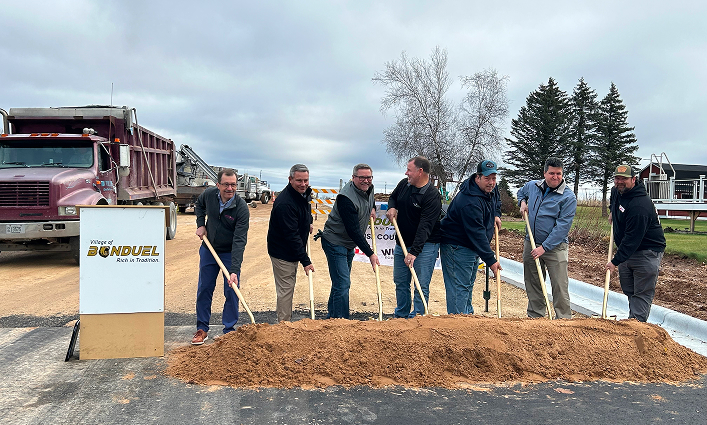
The village of Bonduel, located in Shawano County and home to roughly 1,400 residents, is taking strategic action to meet rural housing needs. As one of 10 communities selected for The Office of Rural Prosperity’s Thrive Rural Wisconsin program, Bonduel is leveraging smart policy and strong partnerships to expand affordable housing and build a more resilient future.
Through a Tax Incremental District (TID) extension under Wisconsin’s TIF law, Bonduel allocated 85% of the funds to support affordable housing. This investment enabled the village to install critical infrastructure–water, sewer, stormwater, and roads–for a new housing development aligned with its Thrive Rural Wisconsin project goals. The remaining 15% of TID funds were used to reduce special assessments for homeowners affected by road improvements, promoting fairness and affordability.
Thrive Rural Wisconsin funding also covered legal and engineering costs for the Sunrise Court portion of the project, helping the village navigate development with confidence. In collaboration with Shawano County Economic Progress Inc. (SCEPI), Bonduel positioned itself as a “Community of Choice,” aiming to attract new housing, revitalize its downtown, and consolidate municipal services.
Bonduel’s strategic use of the TID extension offers a replicable model for rural innovation, demonstrating how local leadership, targeted investment, and community-driven planning can deliver housing solutions that support working families and future growth.
TIF/TID resources
For communities and developers exploring Tax Increment Financing (TIF) and Tax Incremental Districts (TIDs), Wisconsin offers a range of guides, research, and training opportunities:
Flexible and local financing mechanisms
Not all rural housing solutions come from national programs or large institutions. Sometimes the most effective funding is homegrown. Flexible and local financing mechanisms tap into community resources, local government tools, and innovative funding models that adapt to rural realities. Approaches such as revolving loan funds and Tax Increment Financing (TIF) provide nimble, place‑based capital that can fill gaps, unlock stalled projects, and keep decision‑making close to home.
- Revolving loan funds (RLFs): Locally managed funds that recycle loan repayments into new loans, supporting ongoing housing and infrastructure projects
- Local housing trust funds: Municipal or county‑level funds that provide gap financing, pre‑development support, or subsidies for affordable housing
- Employer‑assisted housing programs: Local employers contribute to housing costs or offer down-payment assistance to attract and retain workers in rural areas.
- County infrastructure banks: Publicly managed funds that offer low‑interest loans for infrastructure improvements tied to housing development
- State or regional loan pools: Collaborative funding sources that aggregate capital from multiple jurisdictions to support rural housing projects
- Local impact investment networks: Collaborative groups that bring together community stakeholders such as philanthropies, local governments, financial institutions, and private investors to fund projects that generate both financial returns and measurable social impact within a specific region.
- Leg loans: In 2023, Bipartisan Housing Legislation Package was signed into law that will help expand access to safe, affordable housing for working families. WHEDA is administering four loan programs that will emerge from this housing legislation. The new products are critical to providing solutions to address the state’s housing crisis.
Revolving loan funds
A revolving loan fund (RLF) is a flexible, self-sustaining pool of capital used to make loans for housing or economic development. As borrowers repay their loans with interest, the fund is replenished and can be lent out again, creating a continuous cycle of reinvestment. This makes RLFs especially powerful in rural areas, where access to traditional financing is often limited by market size, perceived risk, or lack of local lending institutions.
Impact on rural housing
- Fills financing gaps: RLFs can support predevelopment costs, site acquisition, infrastructure improvements, or gap financing for affordable housing projects that may not qualify for conventional loans.
- Catalyzes local investment: By recycling capital locally, RLFs build momentum for housing development and attract additional public and private funding.
- Supports targeted housing needs: Funds can be tailored to support workforce housing, senior housing, or rehabilitation of existing units, meeting specific community goals.
- Builds community wealth: Loan repayments stay in the community, allowing local stakeholders to reinvest in future projects and maintain control over development priorities.
How to start a revolving loan fund
Revolving loan funds are engines of local resilience. When designed thoughtfully, they empower rural communities to shape their own housing future, one loan at a time. Download Our Guide to creating a revolving loan fund.
Case Study: Live Local Fund: Jefferson County’s revolving loan initiative
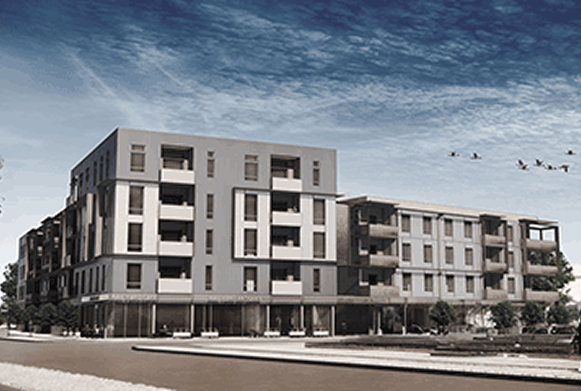
In 2023, Jefferson County’s Thrive Economic Development organization, known as ThriveED, launched the Live Local Fund, a revolving loan program designed to provide gap financing for housing developers in the county. The fund aims to make housing construction more affordable and accessible by bridging financial shortfalls that often stall rural projects. The initiative was seeded with $2 million from the Greater Watertown Community Health Foundation and $1 million from Jefferson County, creating a $3 million pool to support strategic development. One of its early successes was the transformation of underutilized land into a vibrant, mixed-income housing community. The project showcased how local partnerships, flexible zoning, and targeted financial tools can be combined to deliver high-quality homes that meet both workforce and community needs. This model demonstrates how rural regions can use innovative financing to unlock housing potential and attract private investment. Read more about the Live Local Fund on the Office of Rural Prosperity website.
Spotlight
Community development financial institutions (CDFIs)
Community development financial institutions (CDFIs) are mission-driven lenders that specialize in serving underserved communities, including rural areas. They offer affordable financing and tailored financial services to individuals, businesses, and housing developers who may not qualify for traditional bank loans. In regions with limited economic infrastructure, CDFIs play a critical role in bridging financing gaps, supporting local investment, and advancing inclusive development. Their flexible approach and deep community ties make them essential partners in expanding housing opportunities and strengthening rural economies.
Key features of CDFIs in rural housing
- Mission-driven lending: CDFIs prioritize community development over profit, focusing on housing, small businesses, and community facilities.
- Flexible financing tools: CDFIs offer low-interest loans, microloans, and technical assistance to individuals and organizations that may not qualify for conventional credit.
- Public-private partnerships: CDFIs leverage federal funding (e.g., from the CDFI Fund) with private capital to maximize impact. For every $1 in federal support, CDFIs typically attract more than $8 in private investment.
- Local knowledge and customization: CDFIs understand the unique needs of rural communities and tailor financial products accordingly.
- Support for affordable housing: CDFIs finance acquisition, construction, rehabilitation, and preservation of affordable housing units.
- Capacity building: CDFIs provide education, training, and technical assistance to borrowers to ensure long-term success.
Case Study: Prairie Eco Cottages: CDFIs fuel rural innovation
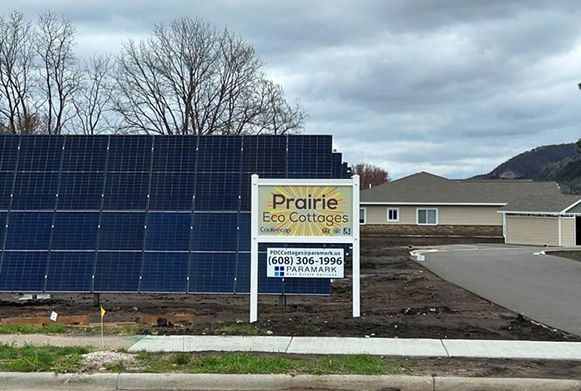
Couleecap, a community development financial institution (CDFI), partnered with Gerrard Corporation to develop Prairie Eco Cottages in Prairie du Chien. The project was made possible through additional support from WHEDA, DOA, the city of Prairie du Chien, Cinnaire Solutions, the Federal Home Loan Bank of Chicago, Solar for Good, and Focus on Energy..
This 24‑unit affordable housing community is designed to serve workers, seniors, and people with disabilities, with rents starting at $478 per month. Powered by an on‑site solar field, the cottages reduce energy costs and make housing truly affordable for residents. Through flexible financing and strong local partnerships, Couleecap helped address two of the most pressing challenges in rural communities: housing affordability and energy costs.
Other financing sources
A successful housing project relies on a diverse mix of funding to support every phase, from planning and construction to rehabilitation and long-term sustainability. These financing sources may come from public agencies, private lenders, and philanthropic organizations. Each funder contributes a distinct layer to the overall capital stack. By blending these resources strategically, communities can unlock more flexible and resilient funding structures that align with local goals and increase the viability of rural housing development.
Examples include:
Key Resource: List of Wisconsin-Serving CDFIs
Created by the Office of Rural Prosperity, this list identifies mission-driven lenders that support housing, small business, and community development across underserved and rural areas in Wisconsin.
Grants and incentives: Funding for housing projects

Grants are an essential tool for advancing housing initiatives because they provide flexible capital from public agencies, private corporations, and philanthropic foundations. Unlike loans, grant funds do not need to be repaid, making them especially valuable for communities with limited financial capacity. These funding sources can be transformative, but each comes with its own eligibility requirements, application timelines, and performance expectations. Understanding these details is critical to securing support and ensuring that projects align with funder priorities.
Grant types
- State and federal grants: Public sector funding from agencies like the U.S. Department of Housing and Urban Development (HUD), U.S. Department of Agriculture (USDA), and state agencies, these grants often support infrastructure, affordable housing development, and community revitalization.
- Private grants: Provided by foundations and nonprofit organizations, these grants typically focus on innovation, equity, and underserved populations, and may offer flexible funding for planning or capacity building.
- Corporate grants: Offered by businesses and corporate foundations, these grants often align with corporate social responsibility goals and may support workforce housing, sustainability, or regional development.
Key Resource: State and federal housing funders
The Office of Rural Prosperity curated a list of key agencies and funding sources that support housing development across Wisconsin. This resource highlights public and government grantors that play a central role in financing affordable housing, infrastructure improvements, and community development. By connecting municipalities, developers, and nonprofits to these funders, the guide helps rural communities identify opportunities, navigate eligibility requirements, and secure critical support for housing projects.
Federal grants: Basic requirements
To successfully apply for federal housing grants, communities and nonprofit organizations must meet several foundational requirements. Preparing these registrations in advance can streamline the application process and improve competitiveness.
- DUNS Number (Data Universal Numbering System): A unique nine-digit identifier for businesses and organizations. While being phased out in favor of the UEI (Unique Entity Identifier), some systems may still reference the DUNS number.
- UEI (Unique Entity Identifier): The UEI has replaced the DUNS number as the official identifier for federal awards. It is issued during registration in the System for Award Management (SAM).
- SAM registration: All entities seeking federal funding must register with SAM.gov. This registration verifies eligibility and allows organizations to receive federal funds.
- Tip: Begin SAM registration early, as processing can take several weeks.
- Renewal: Registrations are valid for one year and must be renewed annually to remain active.
- Grants.gov account: Organizations must also create an account on Grants.gov to search for and apply to federal grant opportunities. This platform is the central hub for federal funding announcements.
- Internal readiness: Before applying, ensure your organization has:
- A clear mission and housing strategy
- Financial statements and audit history
- Capacity to manage and report on federal funds
- Partnerships or letters of support, if required
Key Resource: Federal Grant Checklist to Help You Win Funds
A resource from Nonprofit Hub that outlines how nonprofits can prepare to apply for federal grants.
State housing grantors
- Wisconsin Housing and Economic Development Authority (WHEDA): WHEDA offers financing tools such as Low-Income Housing Tax Credits, multifamily loans, and homebuyer assistance programs to support affordable housing development across Wisconsin. WHEDA Website
- Wisconsin Economic Development Corporation (WEDC): WEDC provides funding and support for community redevelopment projects, including Idle Sites Redevelopment and Community Development Investment grants that benefit rural housing initiatives. WEDC Website
- Wisconsin Department of Administration (DOA): Manages state-level housing and infrastructure grants, including Community Development Block Grant (CDBG) funds for rural communities. Housing Resources
Private and philanthropic funding sources for housing
- Private foundations and impact investors: May provide grants or low-interest loans for housing projects aligned with community development goals
- Community development financial institutions (CDFIs): Offer flexible financing and technical assistance for housing and infrastructure in underserved areas
- Community Action Agencies (CAP agencies): Often serve as intermediaries for federal and state housing funds and may offer direct support for housing rehabilitation and development
- Federal Home Loan Bank Affordable Housing Program (FHLB AHP): Provides competitive grants through Federal Home Loan Banks to support affordable housing projects
Private, corporate, and foundation grant readiness
Getting funding from private companies, foundations, or corporate programs takes preparation. The first step is research: Learn what each funder cares about, look at the types of projects funders have supported in the past, and make sure your work connects with their priorities. Building relationships with program officers or staff can help you understand expectations and open doors.
When you apply, tailor your proposal to the funder’s interests rather than focusing only on your own goals. Show how your project will make a lasting difference and explain how you will measure success. These funders are often inspired by big ideas, but they also want to see results that endure and benefit the community over time.


